Science, Technology, Engineering & Maths : Learning by Doing

Open post

Science Week 2026

British Science Week 2026 Curiosity - What’s Your Question?

British Science Week is a national 10-day festival celebrating science, technology, engineering and maths (STEM) right across the UK. It runs this year from 6–15 March 2026, giving families and schools a wonderful chance to explore the world together through curiosity, creativity and hands-on fun.

This Year’s Theme is “Curiosity: what’s your question?”
The  why the sky is blue, how birds fly, how video games are made, or what makes trees grow tall type questions. British Science Week organisers want young learners to frame their own questions, explore possible answers, and see that science is about asking why, how, and what if?

You don’t need a lab or special equipment to take part — just imagination and a willingness to explore!

The British Science Week website will have activity packs that are full of ideas you can use at home or in the classroom. There’s a taster pack available now covering fun ways to think about curiosity, and full activity packs will be released in January 2026 - suitable for ages from under 5s up to early teens.
Hands-on experiments and investigations
Question prompts to help children think like scientists
Links to competitions and certificates to celebrate participation
Find out more at www.britishscienceweek.org

 

Open post
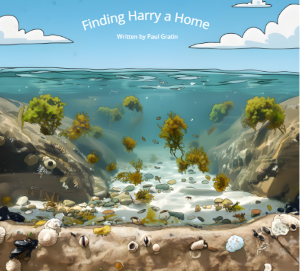
Finding Harry a Home book cover

Finding Harry a Home

Storybook: Finding Harry a Home

Meet Harry. He’s a small crab with a big problem!

Harry lives happily on the shoreline - a magical world of sandy beaches, secret coves and busy rock pools. However right now he  needs to find a new home. But he can’t do it alone... he needs help!

With a gentle storyline, vivid illustrations and lovable characters the book blends storytelling and STEM topics to show that different animals have adapted to live in different habitats and how changes in the environment can affect them.

It is also a story about friendship and how, particularly working together, people can make a difference.

The storybook is available to purchase at Amazon.

It also comes with additional learning resources which you can download using the button below.

Open post
digital art with scratch

Coding with Scratch: Digital Art


Age 7 to 14
Easy

Create three separate apps to automatically draw some crazy artwork. Every drawing will be a unique masterpiece!

Write the code to make the sprite move around the stage and use the pen blocks to draw lines as it moves. We’ll hide the sprite so that the drawings appear like magic.

Then experiment with the code to try out different ideas.

Scratch is a great way for you to learn how to code. Its fun and easy to use ... but also very powerful! It's the programming language used in most schools around the world.

It's completely free to use and runs on most computers.


Open post
chromatography experiment

Chromatography

Science: Chemistry: Separating Mixtures
Age 7 to 13

Exploration rather than explanation. Have fun while learning science.

Coloured chemicals can be separated using a technique called chromatography. This is a chance to mix science and art!

This experiment uses paper chromatography to separate the different coloured dyes in felt tip inks.

Chromatography is also widely used in areas like forensics and developing new vaccines.

The free project guide has all the information you need:

Scroll to top